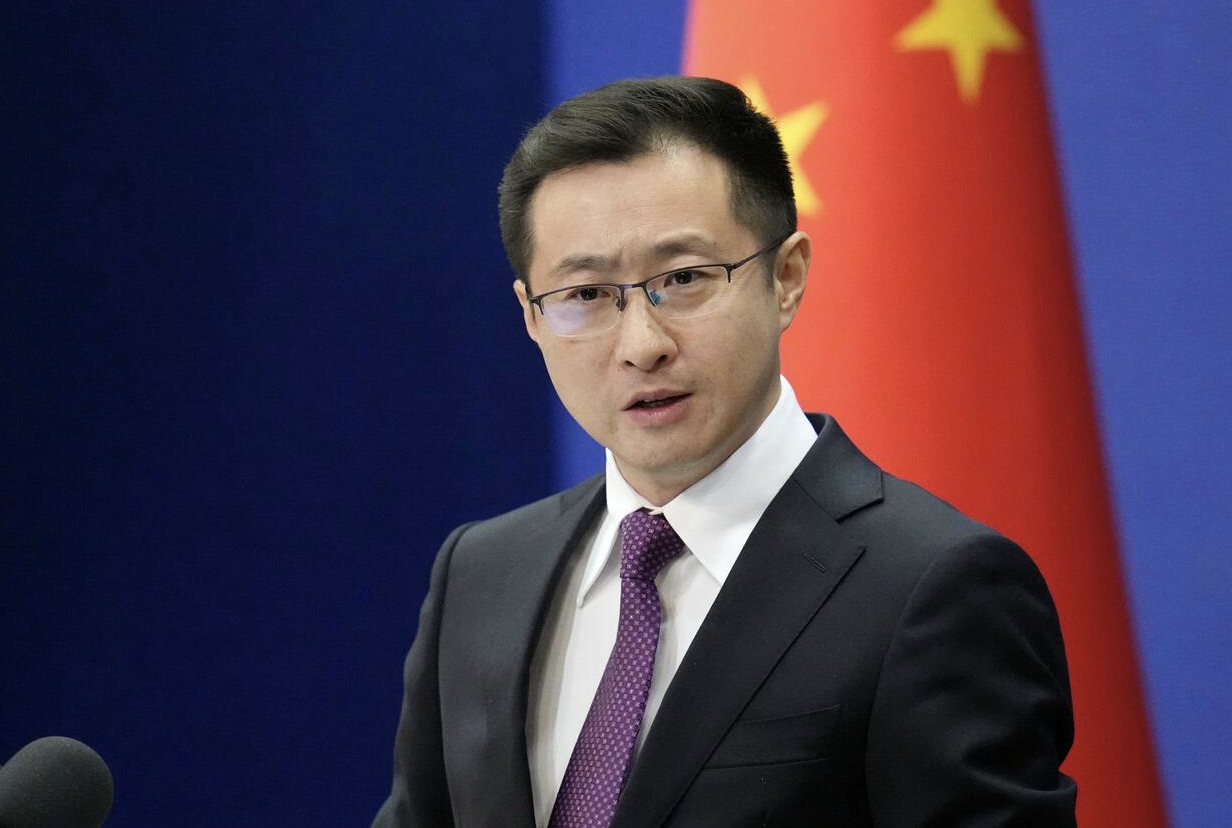
BEIJING, Feb 10 – China on Monday doubled down on its warning to Japan against what it views as possible revival of “militarism” and interference in Taiwan issues, after Prime Minister Sanae Takaichi’s party scored a landslide victory in the weekend general election, strengthening her hand to pursue her conservative agenda.
“We hope Japan follows a path of peaceful development instead of repeating the mistakes of militarism,” Chinese Foreign Ministry spokesman Lin Jian said, reflecting concerns in China that the election outcome will clear the way for Takaichi, known as a security hawk, to bolster her country’s defense capabilities and accelerate deliberations on amending its postwar pacifist Constitution.
Lin also called on Takaichi again to retract her “erroneous” comments in November on a Taiwan contingency and urged her to demonstrate a commitment to upholding the foundation of China-Japan relations through “concrete actions.”
The Chinese people “remain unwavering” in their determination to “thwart all provocations and reckless moves of anti-China forces,” Lin said, adding Beijing’s policy toward Japan “will not change just due to one election.”
The remarks came as China has increased pressure on Japan in the wake of Takaichi’s comments in parliament that suggested the involvement of the Japanese defense forces in the event of an attack on Taiwan, a self-ruled island claimed by Beijing.
Lin also warned Takaichi against visiting the war-linked Yasukuni shrine in Tokyo, saying, “Forgetting history means betrayal, denying guilt means repeating the crime.” Japan needs to “face squarely up to and deeply reflect on its history of aggression,” he added.
Referring to a possible visit to the Shinto shrine, which countries that suffered under Japan’s wartime aggression view as a symbol of past militarism, Takaichi said on a TV program on Sunday, “I’ve been trying to prepare an environment,” adding, “I will secure understanding from allied and neighboring countries.”
The shrine honors convicted war criminals along with the war dead, and past visits by Japanese leaders and lawmakers have caused diplomatic friction with China and South Korea.
No sitting prime minister has visited the shrine since Shinzo Abe, whose visit in 2013 drew disappointment from the United States, Japan’s most important security ally. Takaichi views Abe as her mentor.
Meanwhile, South Korean President Lee Jae Myung offered congratulations to Takaichi in a social media post, expressing hope the two countries will continue to deepen a relationship of cooperation.
Lee, who met with Takaichi in January in her home prefecture of Nara in western Japan, said on the X platform that he is looking forward to hosting her in South Korea in the near future.
Taiwan President Lai Ching-te also congratulated Takaichi on the election victory, saying the outcome showed the “trust and high expectations” Japanese voters place in her leadership and vision.
“Looking forward to working with you to ensure that Taiwan and Japan continue to uphold shared values and a spirit of mutually beneficial cooperation, jointly addressing regional challenges and promoting peace and prosperity in the Indo-Pacific region,” Lai said on X on Sunday.