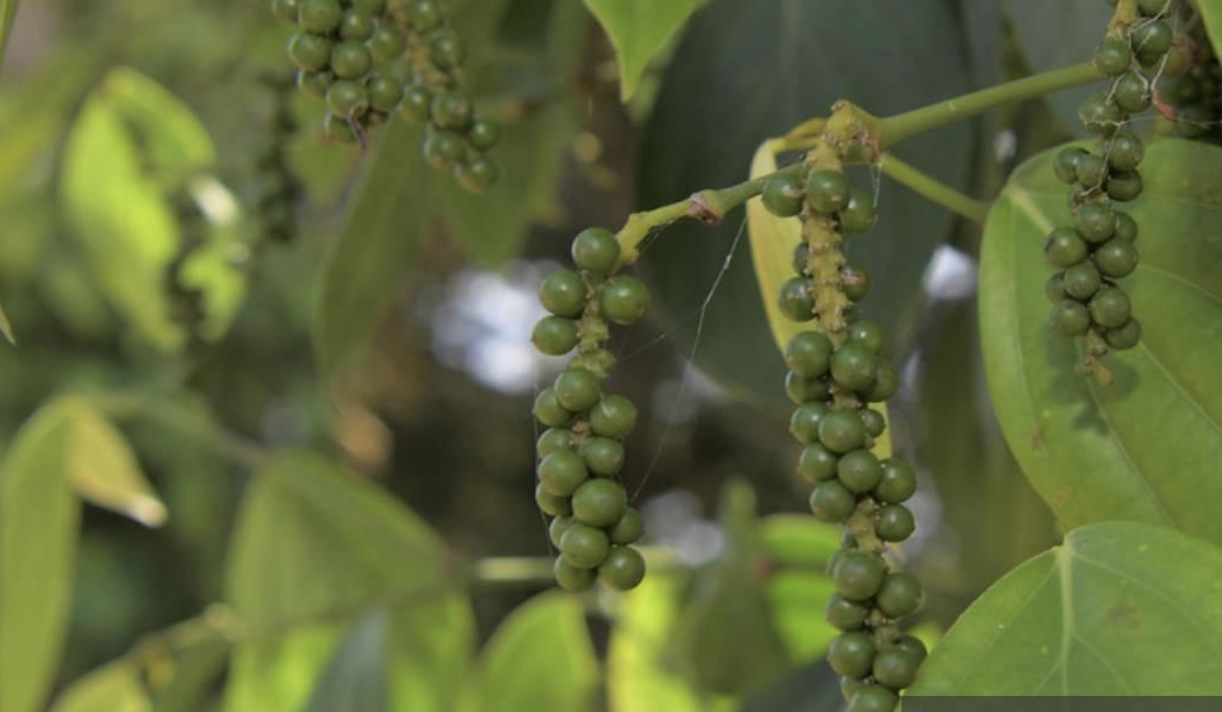
KUALA LUMPUR, Feb 25 — A total of 80 companies are involved in pepper cultivation activities nationwide, covering an area of about 55 hectares, said Deputy Plantation and Commodities Minister Datuk Seri Huang Tiong Sii.
He said that the Malaysian Pepper Board (MPB) has set a new pepper planting target of 300 hectares this year, involving an estimated 1,200 farmers.
“At the same time, MPB is currently assisting about 1,400 farmers in managing and maintaining mature pepper crops covering 350 hectares,” he said during the question-and-answer session in the Dewan Rakyat today.
He was responding to a question from Datuk Larry Soon @ Larry Sng Wei Shien (PBM–Julau) regarding MPB’s efforts to increase the number of new pepper growers and boost the national pepper production.
Huang said MPB is also strengthening research and development activities by focusing on fertigation systems and Internet of things (IoT) technology in a bid to increase pepper output in a sustainable manner.
“MPB is also intensifying developmental activities such as courses, training, and technology transfer aimed at strengthening and upgrading farmers’ skill and competency levels, as well as promoting certification under the Malaysian Good Agricultural Practices (MyGAP) scheme,” he said.
In response to a supplementary question on Malaysia’s efforts to compete with Vietnam in exporting pepper to the international market, Huang explained that the scale of Malaysia’s pepper production scale is limited compared to Vietnam.
“Most pepper cultivation in Malaysia is undertaken by smallholders covering about 8,234 hectares, compared with Vietnam, which has a much larger pepper cultivation area of over 100,000 hectares,” he said.
Huang also informed the Dewan Rakyat that pepper production costs in Malaysia are higher, particularly agricultural input and labour costs.
“The Malaysian black pepper price currently stands at around US$9,000 to US$9,700 (US$1=RM3.89) per metric tonne, higher than Vietnam’s black pepper price of around US$6,500 to US$6,700 per metric tonne, which directly impedes Malaysia’s competitiveness in the international market that is always sensitive to price changes,” he added.
However, Huang stressed that Malaysia has an advantage in terms of high pepper quality, particularly Sarawak pepper which is internationally recognised for its aroma, consistent piperine content, and compliance with strict food safety standards.
“In this regard, a practical strategy for Malaysia is not to compete on price and quantity, but instead to focus on producing premium-quality pepper, strengthening the Malaysian pepper brand, and exploring high-value niche markets as a complement to efforts to increase the country’s export value,” he said.
In line with the Plantation and Commodities Ministry’s aspiration to expand pepper exports, Huang said that the ministry, through MPB, has approved a project to upgrade the pepper processing centre at the Peninsular Malaysia Regional Office in Johor.
“This project aims to produce high-quality, export-grade pepper products. The processing plant has a capacity of one metric tonne per hour.
“The development of this facility is expected to encourage the use of local pepper in both domestic and international markets and is scheduled to begin in 2026, with full completion expected by the end of 2029,” he said.
Earlier, the government approved an allocation of RM16 million for the Pepper Farming Sustainability Programme this year under the first rolling plan of the 13th Malaysia Plan, aimed at implementing new planting schemes focused on premium pepper production, as well as helping farmers cultivate pepper in a more sustainable and competitive manner.