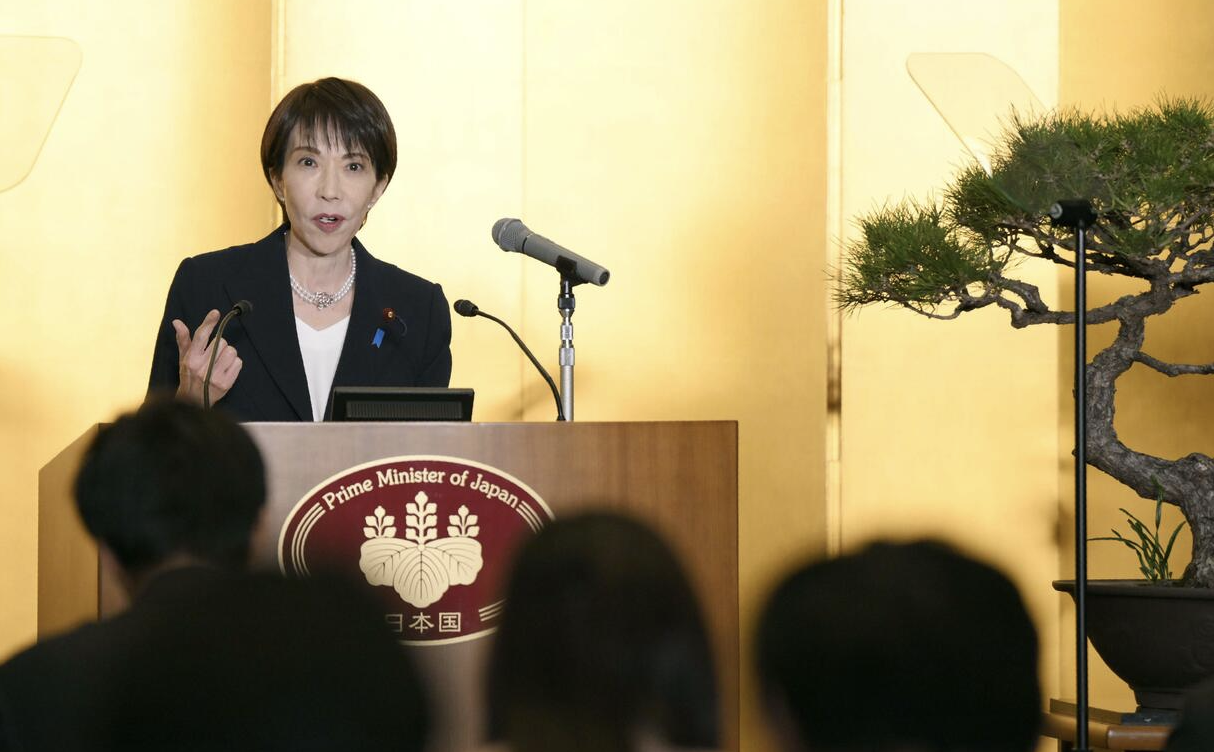
ISE, Japan, Jan 6 – Prime Minister Sanae Takaichi on Monday reiterated that Japan wants dialogue with China as bilateral relations remain strained following her remarks on a Taiwan contingency two months ago.
Communication is important to address concerns and challenges between the two countries, Takaichi said in her first press conference of the year, as she spoke about the government’s priorities.
“Our nation is open to various opportunities for dialogue with China and has never closed the door,” Takaichi said after her visit to the Ise Jingu shrine in the central prefecture of Mie, a traditional new year event for Japan’s prime minister.
On Nov. 7, Takaichi suggested in parliament that an attack on Taiwan could constitute an existential threat to Japan and potentially trigger a response from its Self-Defense Forces to support the United States if Washington backs the democratic island.
The remarks infuriated China as it regards Taiwan as a renegade province to be reunified with the mainland, prompting Beijing to take measures that could dent Japan’s economy such as a travel advisory against visiting the neighboring country.
Since she took office in October, Takaichi has met Chinese President Xi Jinping just once, a week before she made the remarks.
The prime minister also pledged to make “diplomatic efforts to restore democracy in Venezuela and stabilize the situation” following the seizure of President Nicolas Maduro in a U.S. military operation on Saturday. But she stopped short of providing her view on the operation, which raised legal questions at home and abroad.
On the economic front, Takaichi said Japan aims for private and public investment worth more than 50 trillion yen ($320 billion) in the artificial intelligence sector by utilizing over 10 trillion yen in public assistance, which she said could have about a ripple effect of around 160 trillion yen.
Takaichi vowed to steadily lower the ratio of the government’s debt to gross domestic product, apparently taking account of market concerns that her aggressive fiscal spending policy may make the yen even weaker and send long-term government bond yields higher.