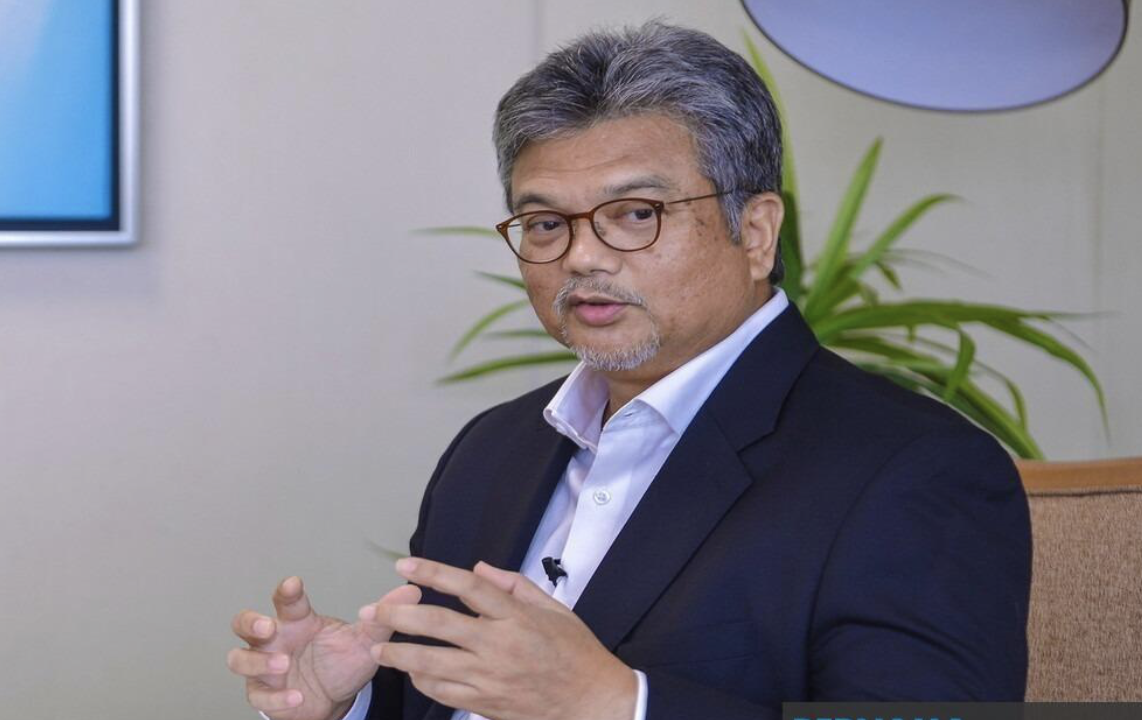
PUTRAJAYA, Dec 7 — The Public Sector Home Financing Board (LPPSA) is set to make history by launching its first-rated sukuk programme next year, a strategic move aimed at expanding its funding ecosystem while supporting the government’s efforts in prudently managing the country’s liabilities.
Chief executive officer (CEO) Mohd Farid Nawawi said the proposed establishment of a sukuk programme of up to RM25 billion is expected to achieve an “AAA” credit rating, and this rating is based on LPPSA’s strong financial fundamentals, stable salary deduction model, and excellent financial management record since its establishment under the Ministry of Finance in 2016.
He said this initiative demonstrates that LPPSA does not rely solely on the “government guarantee” but is proactively seeking alternative mechanisms to balance its funding needs.
“As a statutory body, the government’s aspirations under the Fiscal Responsibility Act to strengthen the country’s fiscal position are our concern.
“Although the ‘government guarantee’ remains relevant to ensure our cost of funds is low to maintain affordable financing rates for civil servants, the establishment of this rated sukuk programme reflects our commitment not to indirectly burden the national guarantee ceiling,” he said when met in an exclusive interview with Bernama recently.
Mohd Farid said LPPSA wanted to show investors that the agency has its own “stand-alone” credit quality.
“Our assets are strong, and our monthly collections are very stable. Insya-Allah, with the ‘AAA’ rating, we will be able to attract the investor segment, while helping the government optimise the management of the country’s contingent liabilities,” he said.
HSBC’s RM1 billion facility indicates market confidence
Commenting on the recent successful collaboration between LPPSA and HSBC Amanah for the Receivables Financing-i (RF-i) facility worth RM1 billion, Mohd Farid said this is an essential benchmark for financial institutions’ acceptance of LPPSA’s credit without a government guarantee.
“The introduction of this facility is a success for us. We are using our monthly cash flow as collateral to the bank, and it agrees to provide financing based on our own financial and operational strength,” he said.
He said the measure bolstered confidence in the establishment of LPPSA’s own-rated sukuk programme next year to meet the financing needs of nearly 1.6 million civil servants.
As for loan quality, Mohd Farid said LPPSA’s non-performing loan (NPL) rate remained below one per cent, reflecting healthy asset quality.
He noted that there were minor challenges involving military personnel with short service periods who left early, but their housing loan balances remained high.
“When they leave, some get better jobs and can refinance at the bank, but some do not. This becomes our NPL.
“But our job is not to auction people’s houses; our job is to help them get financing facilities for their homes,” he said.
Mohd Farid said LPPSA also offers a loan settlement plan (DSP) for borrowers who exit the service, allowing them to restructure their payments until they are stable and eligible for refinancing from external institutions.
Regarding the possibility of introducing a “rent-to-own” product, Farid said LPPSA currently does not see any urgent need, although several financial institutions have implemented it.
He said that the “rent-to-own” concept is still under consideration, but it is not appropriate to introduce it now.
“If there is a need, we can review it,” he added.
LPPSA’s ESG focus is on access to civil servant housing
Mohd Farid said green financing or new urban projects are not yet a priority, as LPPSA is focusing on the social element of the environmental, social and governance (ESG) agenda, namely ensuring that civil servants can own homes at a four per cent rate.
He said that collaboration with the Ministry of Housing and Local Government and developers towards greener development is under study, including potential future incentives.
Mohd Farid also shared that since he took over as LPPSA’s CEO in 2020, one of the biggest innovations has been the digitalisation of communication channels through e-Counter, which enables transactions to be conducted virtually.
He said that, apart from e-Counter, LPPSA also has various digital communication channels, including via WhatsApp, MyfinancingApp, JAccess, Lia Chatbot, IVR Self Service, Live Chat, and e-Ticket.
“Previously, some came from Sabah, Sarawak or Johor simply to collect their titles or check their status. With e-Counter, they can speak directly with officers via video call,” he said.
He said the use of digital channels increased to 68.8 per cent compared to 2020, when we utilised only five communication channels.
Mohd Farid stressed that LPPSA is an organisation whose goal is to provide facilities to civil servants and its primary commitment is to ensure that housing financing facilities remain relevant, strong and reliable.
“We will continue to be better. In the past, civil servants received many benefits. Today, the situation has changed, but housing remains a basic need, so we will ensure that these facilities are safeguarded and remain strong for future generations,” he added.