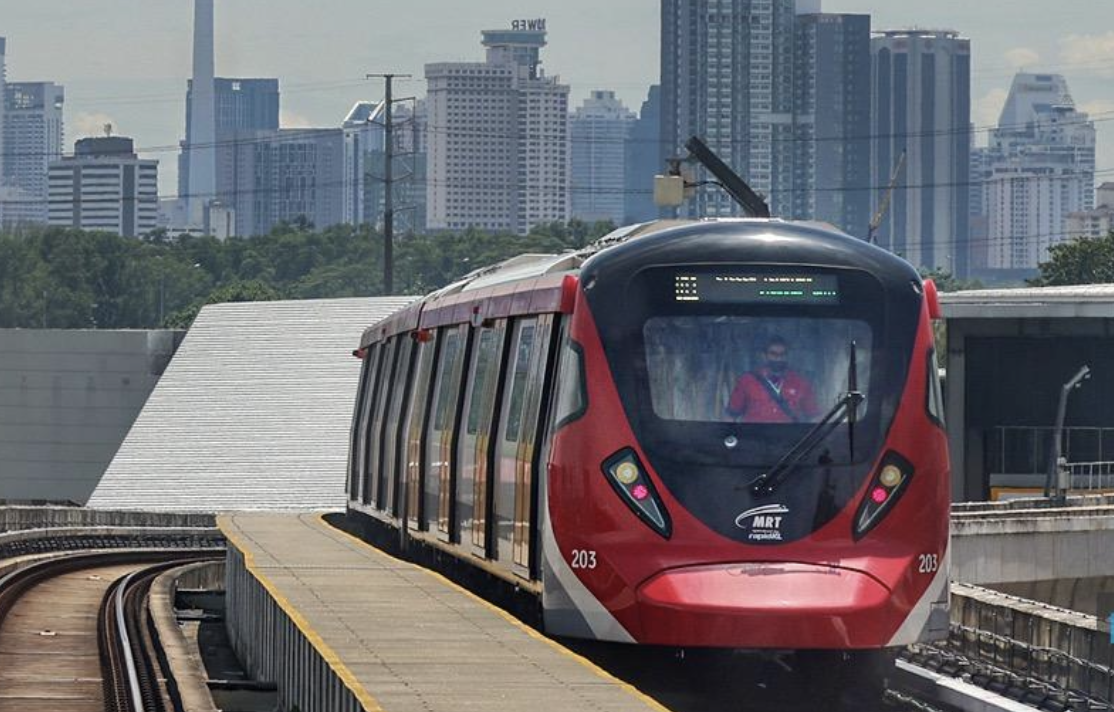
KUALA LUMPUR, Feb 23 — Rapid Rail Sdn Bhd (Rapid Rail) has extended peak-hour rail service periods throughout the month of Ramadan to accommodate changes in passenger travel patterns, Transport Minister Anthony Loke said.
He said the adjustment involves extending the morning peak hours from 6.30 am to 9.30 am, compared with 7 am to 9.30 am during regular months. Meanwhile, evening peak hours have been extended from 4 pm to 8 pm, compared with 5 pm to 7.30 pm previously.
“This measure is implemented to ensure smooth service operations, enhance passenger comfort, and guarantee operational efficiency, particularly in managing passenger movement during earlier return trips to prepare for breaking fast,” he said during a question-and-answer session in the Dewan Rakyat today.
He was responding to a question from Syahredzan Johan (PH-Bangi), who asked whether the peak service hours of Rapid Rail – operated by Prasarana Malaysia Bhd, Rapid Rail’s parent company – would be adjusted during Ramadan, following changes in passenger movement patterns.
In response to a supplementary question from Syahredzan regarding preparedness for service disruptions during Ramadan, Loke said that such preparedness is carried out at all times and is not limited to the Ramadan period alone.
“However, we are now practising predictive and preventive maintenance, which is to ensure that regular maintenance of our systems, as well as our trains, is carried out continuously, to reduce the likelihood of service disruptions,” he said.
He added that, although technical disruptions are difficult to predict, various mitigation measures have been implemented, including the deployment of technical staff on trains, as well as station management training to control passenger movement and reduce congestion.
Meanwhile, responding to a supplementary question from Dr Abd Ghani Ahmad (PN-Jerlun), on the effectiveness of maintenance and commitment to key performance indicators (KPIs), Loke said that the number of rail service disruption incidents has shown a significant decline since 2022.
“So there has indeed been continuous improvement, and this shows that the mitigation measures taken by Prasarana to ensure better maintenance have produced results.
“We have set a KPI whereby if a train does not operate for more than five minutes, it is considered a disruption. Therefore, we want to ensure that if a disruption occurs, it can be restored as quickly as possible,” he said.
In this regard, he said that the Ministry of Transport and Prasarana will continue to improve aspects of communication and passenger management, to ensure that rail services are more efficient and earn public confidence.