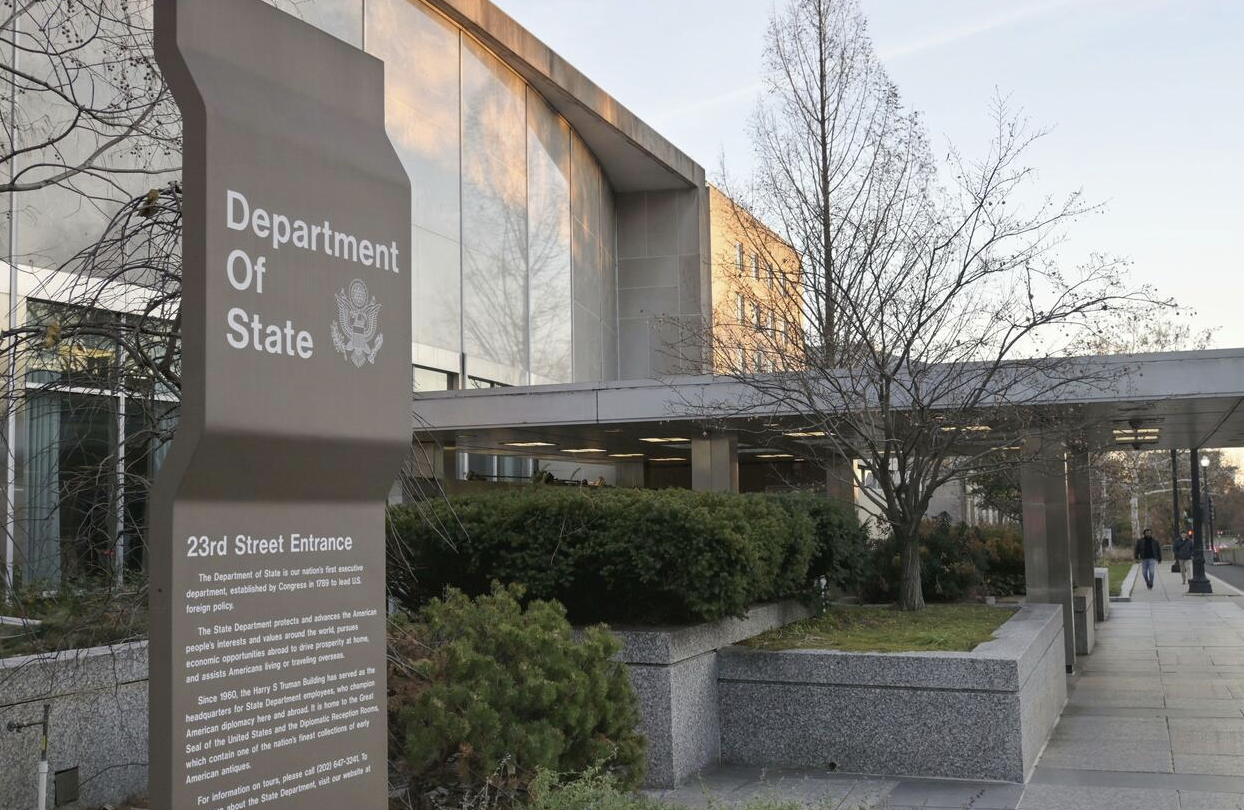
WASHINGTON, Dec 20 – The United States will find ways to work with China without undermining Washington’s security commitments to Japan and other allies in the Indo-Pacific region, Secretary of State Marco Rubio said Friday.
Rubio’s statement during a rare press conference at the State Department came as tensions between Japan and China have flared anew over Taiwan, and while President Donald Trump’s administration has sought to forge a better relationship with Beijing.
Despite difficulties with China over many issues, Rubio said, the United States needs to engage with the world’s second-largest economy as it will remain a powerful country and a significant factor in geopolitics.
Known as a longtime China hawk during his Senate career, Rubio quipped that he has been “nice” to Chinese officials “in terms of the work we have to do with them.”
While noting that the United States and China have made progress in improving relations in recent months, Rubio, who doubles as Trump’s national security adviser, said Japan is a “very close ally of the United States.”
Describing the ongoing feud between Japan and China as “preexisting,” he said the administration sees it as “one of the dynamics that has to be balanced in that region.”
“We can continue with our strong, firm partnership and alliance with Japan, and do so in a way that continues to allow us to find productive ways to work together with (China),” he said in his first public comments since the eruption of the row between the Asian countries last month.
The flare-up began after Japanese Prime Minister Sanae Takaichi said in parliament on Nov. 7 that an attack on Taiwan could constitute a “survival-threatening situation” for Japan.
Takaichi’s reference to the legal term has been interpreted as suggesting that such a situation could prompt a response involving Japan’s forces and those of the United States under the right to collective self-defense.
China has been infuriated as it views Taiwan as its own territory and has not ruled out the use of force to take control of the self-ruled island.
The U.S. top diplomat said both the United States and China are “mature enough” to recognize the need to cooperate where possible even while friction may be likely for the foreseeable future.
“Our job is to balance these two things. I think both sides understand that,” he said, adding he believes the United States is capable of working with China “without imperiling or in any way undermining our very firm commitment to our partners in the Indo-Pacific” including Australia, Japan and South Korea.
Since Takaichi’s remarks on Japan’s potential role in a Taiwan contingency, China has taken a series of measures to punish the key U.S. ally in Asia.
The measures have included urging Chinese citizens not to visit Japan, canceling many events and sending coast guard vessels to waters near the Tokyo-controlled, Beijing-claimed Senkaku Islands.
In early December, Japan’s ties with China soured further in the wake of Chinese military aircraft locking radar on Japanese fighter jets over international waters southeast of Okinawa’s main island, an area close to the Senkakus.
Trump, who met both Takaichi and Chinese President Xi Jinping in late October, has not made his position public on the rising tensions between Japan and China. Unlike previous U.S. presidents, Trump, who plans to visit China in April, has not talked much about Taiwan either.
Rubio’s remarks at his year-end press conference echoed the White House response last week to the Japan-China dispute.
At the time, White House spokeswoman Karoline Leavitt evaded answering when asked at a press briefing whether the Trump administration was concerned about a potential conflict between Japan and China, and what actions the United States may take.
Instead, Leavitt said the president “has a good working relationship with President Xi, which he believes is a good thing for our country,” adding that Trump “believes that the United States should be in a position to have a good working relationship with China while maintaining our very strong alliance with Japan.” – Kyodo news agency